COMMERCIAL GREENHOUSE TECHNICAL REFERENCE
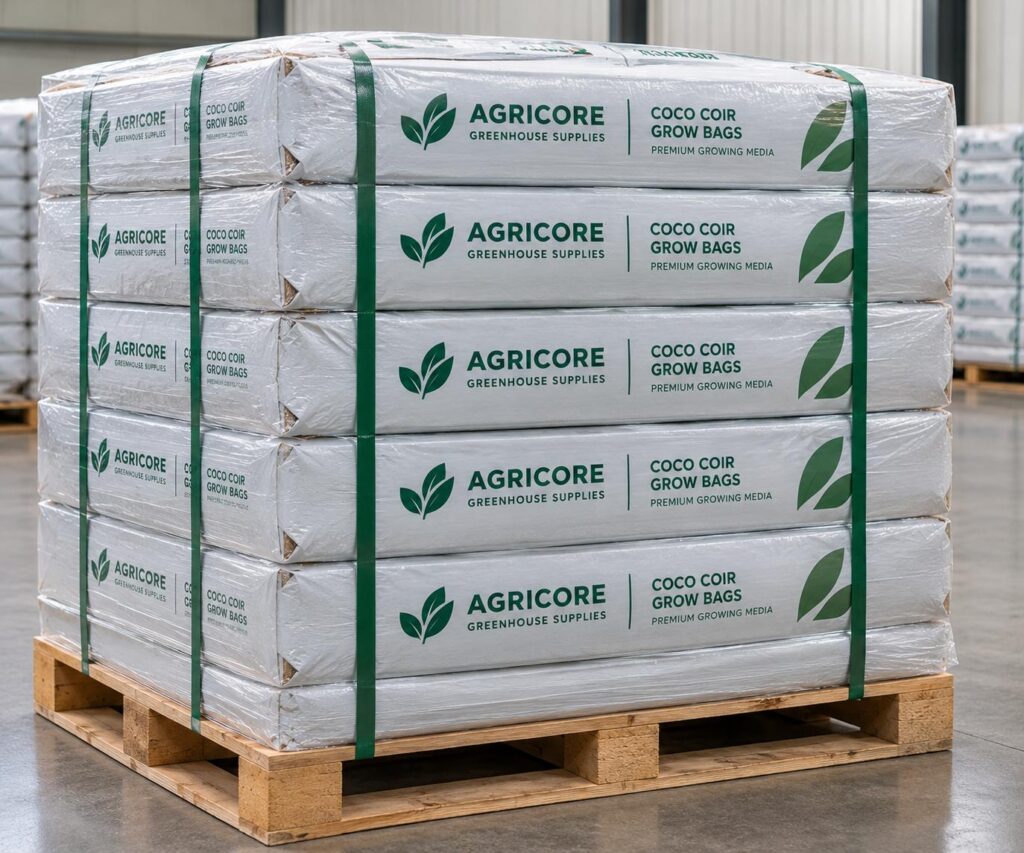
Coco Coir Grow Bag
Installation, Expansion & Irrigation Guide
Precision-engineered coco coir grow bags and slabs for commercial greenhouse production. Built for reliable drainage, uniform expansion and season-long crop performance.
Product Family: Coco coir grow bags / slabs | Primary Crops: Tomato · Cherry Tomato · Cucumber · Pepper · Courgette | Application: Commercial greenhouse production
Premium Growing Media for Commercial Greenhouses
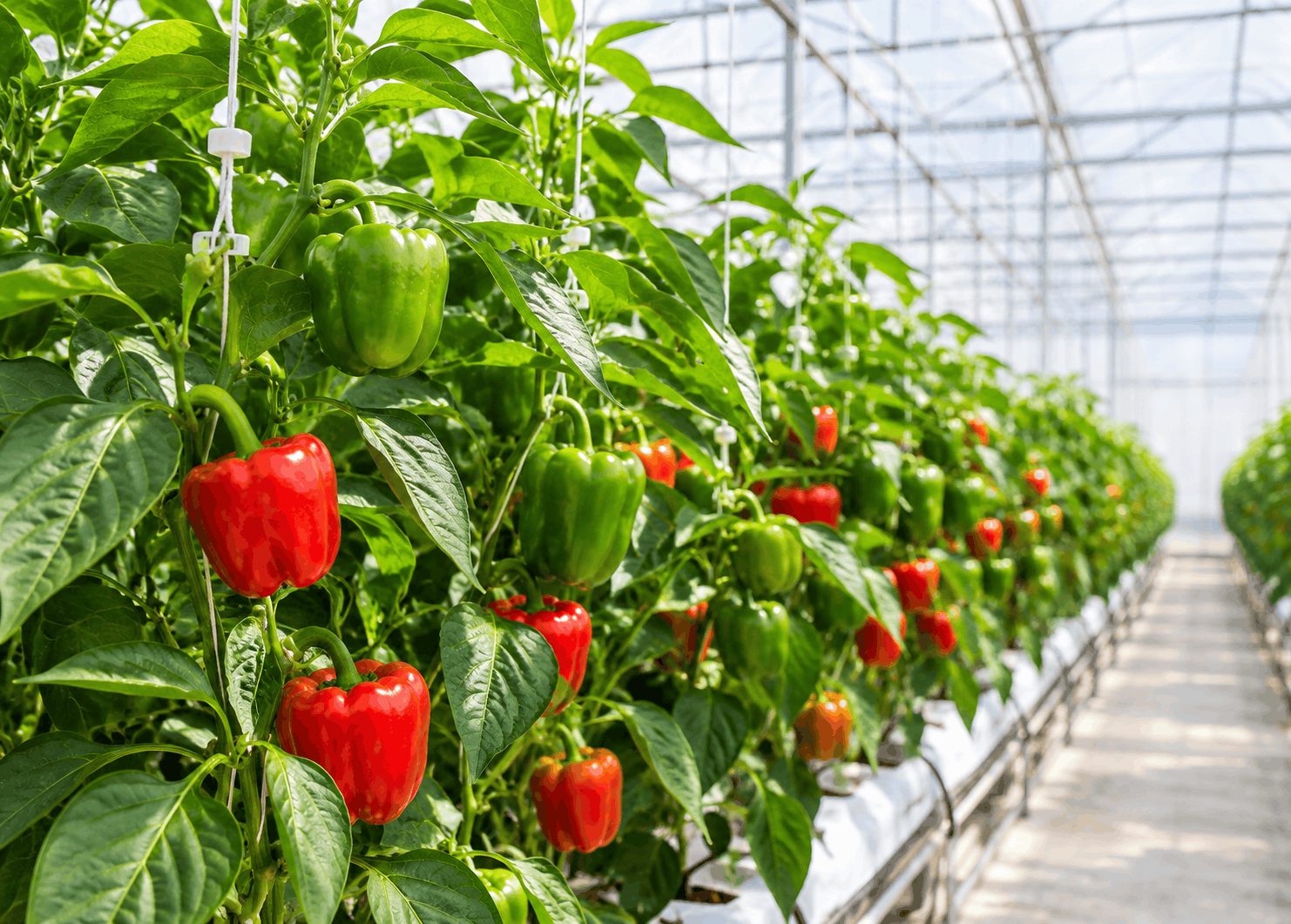
Agricore coco coir grow bags deliver consistent structure, controlled expansion and dependable drainage for high-performance greenhouse crops.
- Uniform Expansion — Progressive hydration produces even coir profile along the full bag length
- Reliable Drainage — Engineered openings support free drainage and root-zone oxygen
- Commercial Grade — Built for multi-cycle use in demanding greenhouse environments
- Crop Versatile — Proven framework for tomato, cucumber, pepper, courgette and more
01 — Installation
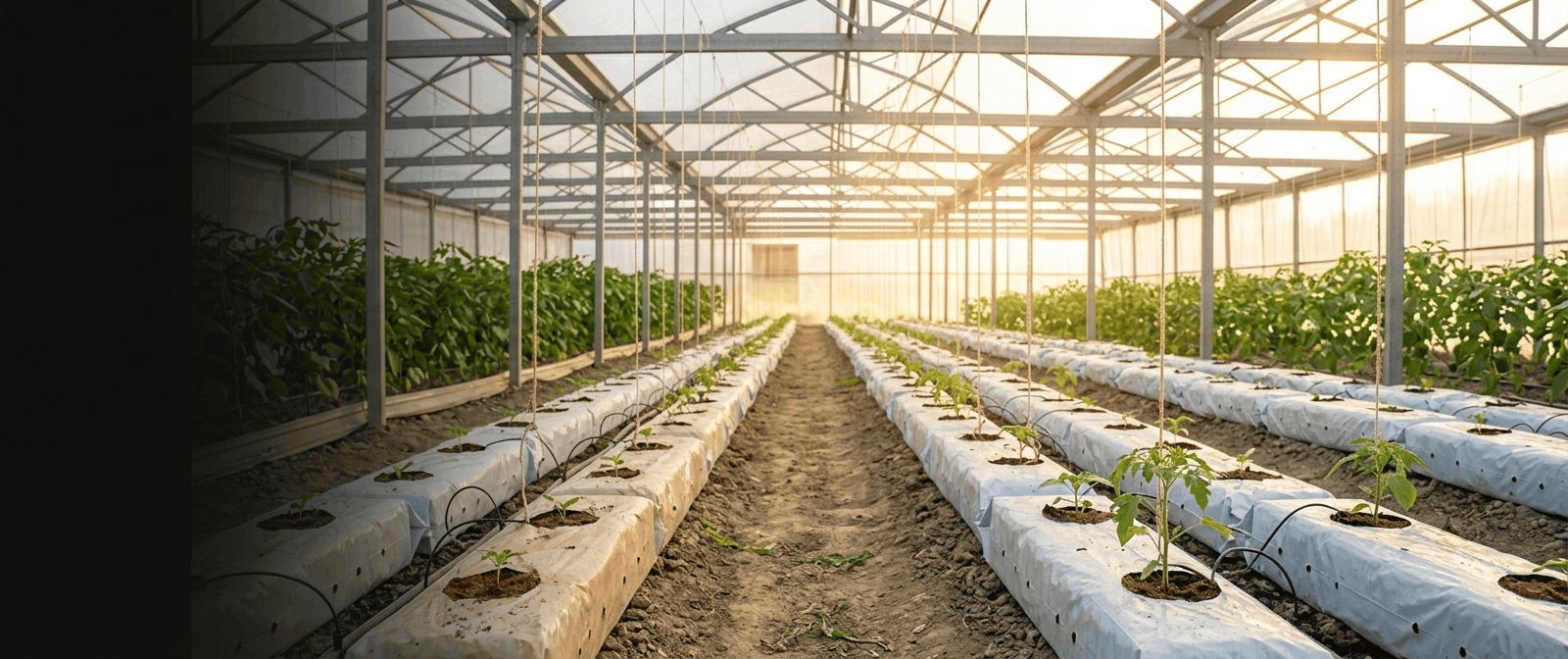
Install Agricore coco coir grow bags on a clean, stable and generally level growing surface. For suspended-gutter systems, confirm that the support system provides reliable drainage.
Drainage is fundamental. Position each bag so water can exit freely and prevent the bag from sitting in standing water. If the surface is uneven, use an appropriate rigid support layer to maintain the intended drainage profile.
Bag placement and spacing
Place bags in straight rows with consistent spacing. Allow enough room for the bags to reach their designed hydrated dimensions without pressing against neighbouring bags. Final spacing should be based on the exact Agricore bag size and greenhouse layout.
Planting and dripper preparation
Where planting and dripper holes are pre-cut, align emitters with the designated positions. Where holes are not pre-cut, position emitters so water is distributed consistently through the coir profile without unnecessary penetration.
Before hydration, confirm that drainage openings are unobstructed and each bag is correctly positioned. Do not begin full irrigation until the drainage path has been checked.
02 — Initial Hydration & Expansion
Coco coir expands as it hydrates. The objective of the initial irrigation cycle is to wet the entire growing medium progressively and uniformly, rather than saturating the bag with a small number of very large irrigation events.
- Begin with small, frequent irrigation applications.
- Monitor drainage and uniformity of expansion along the full bag length.
- Increase the interval between irrigation events if excessive drainage occurs before the bag has expanded uniformly.
- Continue until the bag reaches its intended hydrated shape and the coir profile is evenly wetted.
- Keep the substrate consistently moist during the initial stabilization period and avoid unnecessary dry-down cycles.
FORMULA
Water volume (L) = target moisture content × hydrated substrate volume (L)
Example: Hydrated bag with 20 L substrate volume and 60% target moisture → 0.60 × 20 = 12 L
Illustrative calculation only. Use the final Agricore laboratory specification for commercial programming.
03–04 — Rooting & Growing Phase
Irrigation during rooting
Immediately after planting, frequent irrigation events help establish hydraulic contact between the propagation block and the coir growing medium. Shot volume and frequency should be adjusted for crop, plant size, greenhouse radiation, water quality and emitter configuration.
| Stage | Starting Framework | Adjustment |
|---|---|---|
| Immediately after planting | Small, frequent shots | Maintain uniform wetting and avoid prolonged saturation |
| Early rooting | Increase frequency with crop demand | Watch drainage, root-zone moisture and radiation |
| Roots established | Adjust shot size / interval as demand rises | Base changes on plant uptake and substrate response |
Irrigation frequency should not be set from a fixed clock schedule alone. Radiation, plant transpiration, drainage percentage and root-zone moisture should be considered together.
Start of growing phase
Once roots have established throughout the growing bag, irrigation can transition from establishment-focused watering to a crop-demand program. Start conservatively and increase irrigation as plant load and radiation increase.
- Track irrigation volume per event and total daily irrigation.
- Record drain volume and, where applicable, drain EC and pH.
- Use substrate moisture or bag-weight measurements when available.
- Use accumulated solar radiation between irrigation events as an additional control variable.
- Make changes gradually so the root zone does not experience abrupt wet/dry swings.
05–06 — Fertigation & Irrigation Strategy
Fertigation & water quality
Agricore coco coir should be managed with a crop-specific fertigation program. Nutrient targets must be established using source-water analysis, coir buffering characteristics, crop stage and local agronomic recommendations.
Calcium and buffering: Fresh coir can interact with calcium and other cations during the early stage of use. The fertigation program should be based on the verified chemical characteristics of the Agricore substrate and monitored through irrigation-water and drain analysis.
Recommended monitoring: Source-water EC and pH · Feed EC and pH · Drain EC and pH · Drain percentage / drainage volume · Substrate moisture or bag weight · Crop response, root development and plant balance
Important: Final nutrient recipes should be supplied or approved by the Agricore agronomy team, based on the exact coir blend, buffering treatment, water quality and crop program.
Irrigation start & stop strategy
Start of day: Begin irrigation according to crop demand, greenhouse radiation and measured overnight moisture status. Bags retaining more water overnight may require a later start than bags with greater overnight dry-down.
End of day: Use final irrigation timing to manage overnight dry-down. The target should be established for the specific Agricore bag and crop rather than copied from another substrate system.
07 — Crop-Specific Considerations
Use this framework when setting up Agricore coir programs. It is a starting structure rather than a fixed recipe.
| Crop | Key Irrigation Focus | Main Observations |
|---|---|---|
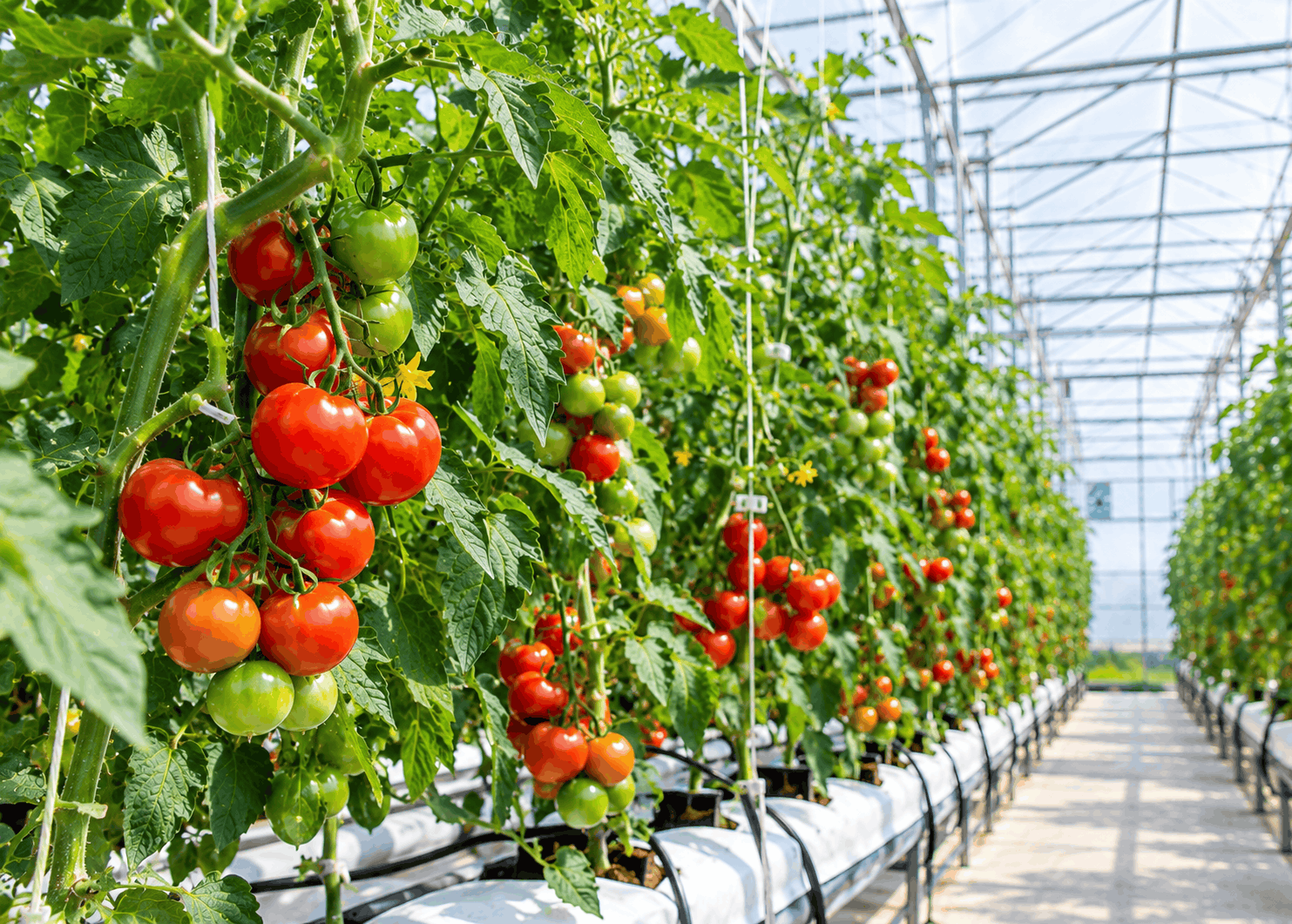
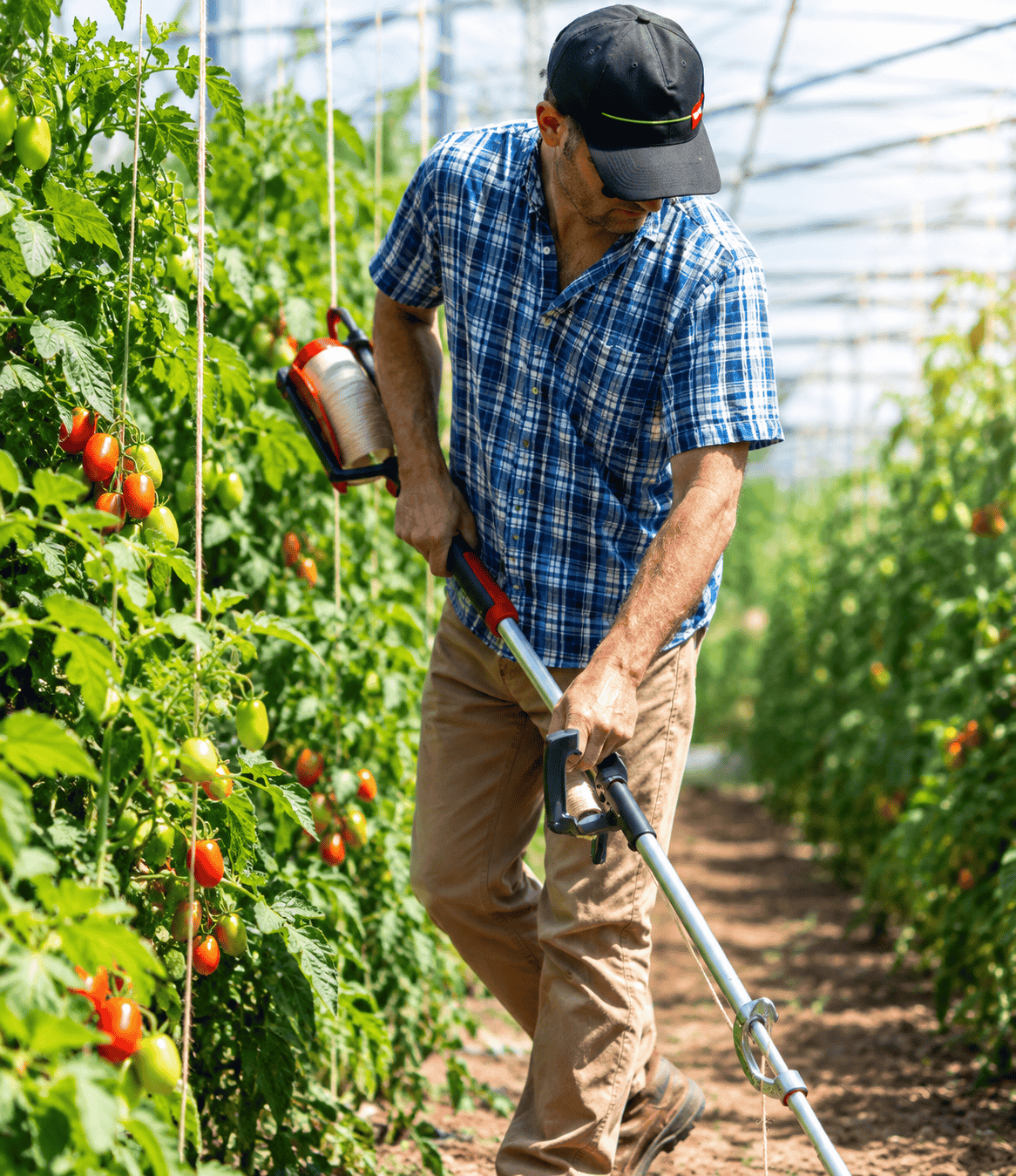
| Tomato | Stable root-zone moisture and controlled dry-down | Plant load, radiation, drain EC/pH, root activity |
| Cherry tomato | Frequent response to radiation and crop demand | Plant balance, fruit load, moisture trend |
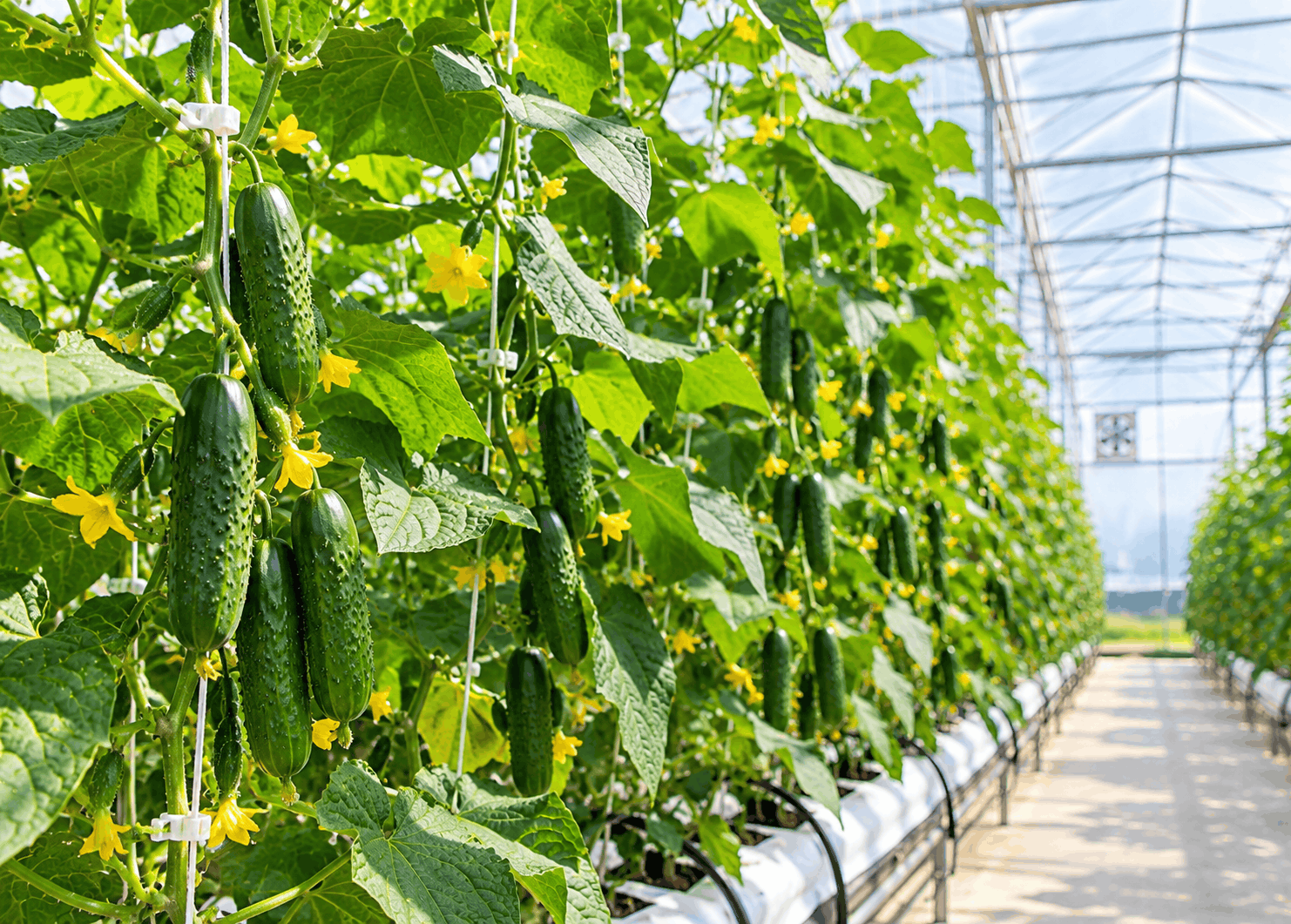
| Cucumber | High and rapidly changing water demand | Radiation, plant size, drain percentage |
| Pepper | Avoid prolonged saturation while maintaining uniform moisture | Root-zone oxygen, crop load, moisture trend |
| Courgette | Adjust as leaf area and transpiration increase | Radiation, plant demand, drainage |
08 — Troubleshooting
Bag is not expanding uniformly
Check emitter placement, blocked drainage openings, uneven support and whether irrigation is too aggressive or too infrequent.
Excessive drainage
Reduce the size or frequency of early irrigation events and confirm that the bag has reached the intended hydration stage.
Dry zones remain
Check emitter distribution, bag positioning and whether the initial wetting cycle was stopped too early.
Drain EC rises
Review irrigation volume, crop uptake, source-water EC and fertilizer concentration before making major changes.
Root zone remains excessively wet
Verify drainage, irrigation frequency and greenhouse environmental conditions.
09 — Commercial Grower Checklist
- Growing surface is level and provides reliable drainage.
- Drainage openings are clear before irrigation begins.
- Rows and bag spacing match the greenhouse layout.
- Drippers are positioned correctly.
- Initial hydration is gradual and uniform.
- Bag dimensions and hydration are checked before planting.
- Feed EC and pH are recorded.
- Drain EC, pH and drainage volume are monitored.
- Moisture or bag-weight measurements are used where practical.
- Irrigation changes are based on crop demand and greenhouse conditions.
10 — Important Technical Note
This Agricore guide is intended as a general commercial growing reference. Irrigation and fertigation strategies must be adapted to the exact Agricore coir product, crop variety, greenhouse climate, emitter configuration, source-water quality and local growing practices. Product-specific specifications, laboratory data and agronomic recommendations should take precedence over generic starting values.
Need help setting up your coir program?
Talk to our team about grow bag sizes, samples and the right starting program for your crop and greenhouse.
Abhishek Tomar — Sales Director
+1 604 561 3426 · +1 672 599 5005 (Cell & WhatsApp)
abhishek@agricore.ca
Dhiraj K. Sharma, CPA — CFO
+1 604 537 3119 · dhiraj@agricore.ca
www.agricore.ca · Unit 226, 7404 King George Blvd, Surrey, BC V3W 1N6